
Should We Have Midlife Doctors?
Pediatrics is for kids. Geriatrics is for seniors. But medicine has no clear home for the health care nomads of middle-age. Is it time for mediatrics?


It’s common for doctors to specialize in children or seniors because both groups have distinct needs, risks and challenges. Middle-age is another life phase with its own unique issues, but few healthcare settings focus on it. This represents a gap in healthcare.
Pediatric care emerged as a specialty in the late 1800s to address problems like high infant mortality, infectious disease and the need for expertise in feeding, growth and child development. Geriatrics developed more gradually over the 20th century as the medical field recognized that older adults face the highest rates of chronic disease and often experience health problems differently than younger adults.
In the 2020s, similar recognition about middle-aged adults has begun to take hold. Midlife has its own cluster of biological transitions, accumulated aging and stressors. Evidence has converged with public attention and clinical interest to establish that midlife isn’t just a neutral bridge between people in their late 30s and old age. It’s a distinct phase marked by shifts in hormones, metabolism, body composition, immunity and brain health.
Because the period from ages 40-60 is when we see upticks in chronic diseases, it’s also a critical window for disease prevention, as well as early detection and treatment. Over 50% of midlife adults manage multiple chronic conditions, compared to just 27% of young adults. Middle-age is when the dam breaks, or the cracks begin to form, unless we’re proactive.
Would a midlife care specialty help?
Despite what we’ve learned about midlife as its own life stage, there’s no formally recognized specialty called midlife care—no title comparable to pediatrician or geriatrician, and no standardized training pathway. Without such a discipline—called mediatrics?—midlifers default to primary care, following the guidance of physicians who treat health problems that become more common in midlife, but they haven’t received specialized training in midlife-specific issues.
Given the obstacles to creating a new specialty, such as buy-in from medical boards, another approach might work better: shifting the focus of internal medicine for midlifers toward aging and disease prevention. “I don’t know if midlife health needs to be a specialty,” says Carrie Karvonen-Gutierrez, director of the Center for Lifecourse Epidemiology and Aging Research at the University of Michigan School of Public Health. “Change could mean internal medicine doctors opening their line of sight to the full spectrum of the aging process.”
Care that isn’t designed to address the distinct needs of this life stage can have real consequences. For example, doctors rarely recommend bone scans for middle-aged women, and guidelines don’t recommend them until age 65—even though “nearly half of lifetime bone loss occurs earlier, during and immediately following the menopausal transition,” Karvonen-Gutierrez says. A doctor trained in midlife health might routinely give such scans to women in their 40s. If bone loss has begun, certain interventions like more resistance training and even bone-active medications may help prevent osteoporosis and fragility fractures that cause disability.
Or if a person is experiencing more difficulty remembering names, many of today’s internal medicine doctors might chalk it up to normal aging. A clinician concentrating more on midlife prevention would be better versed in how such issues could (in some cases) be the earliest signs of brain pathology. They could offer reassurance while encouraging the midlifer to audit their lifestyle for brain health risks such as hypertension, poor sleep, depression, inactivity and air pollution. The patient would be motivated to make changes that reduce the risk of cognitive decline and dementia.
A midlife specialist would also be more likely than a primary care doc to pay close attention to a modest rise in blood pressure, since midlife hypertension is consistently linked to cognitive decline and dementia risk decades later.
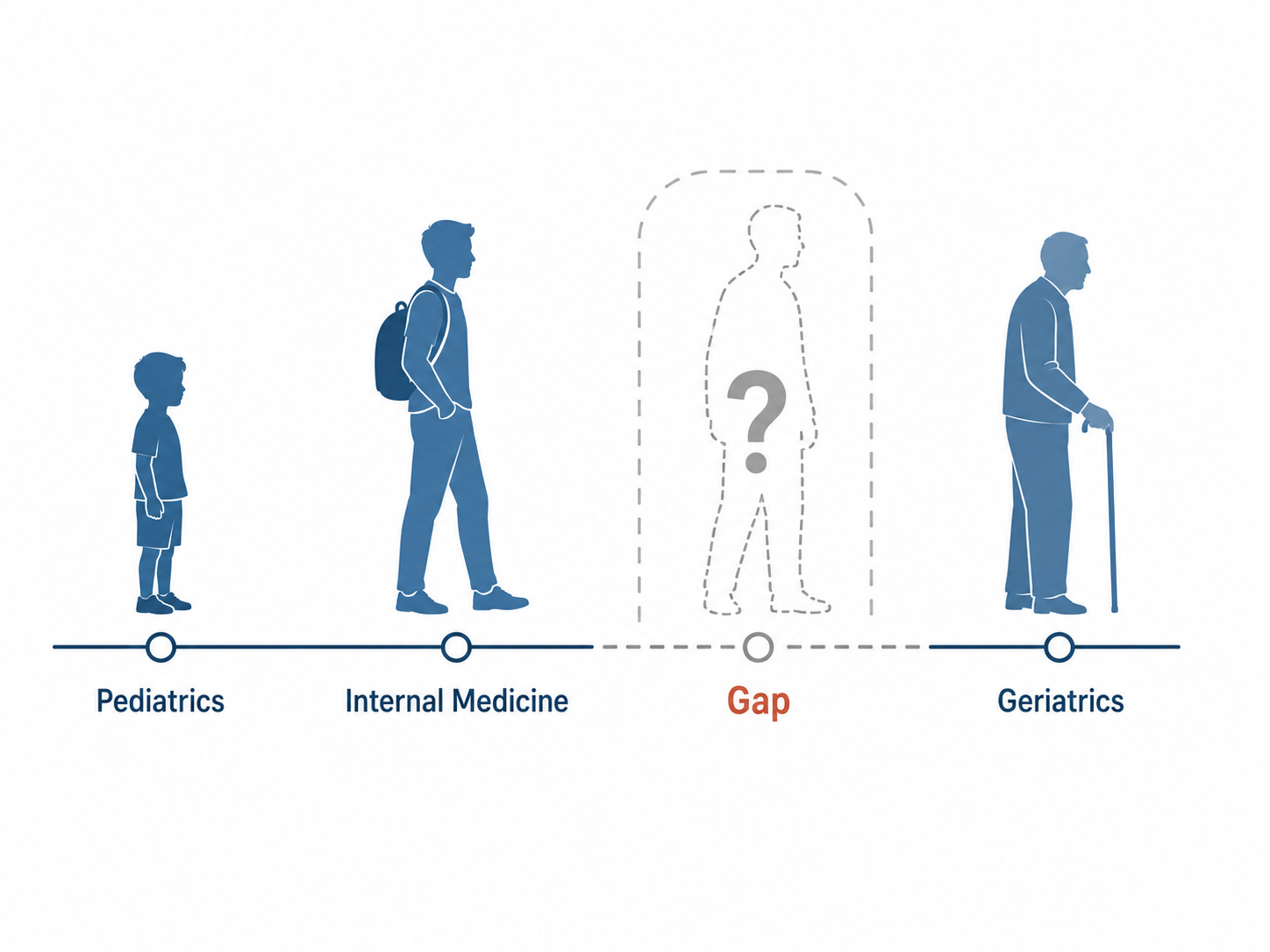
Internal medicine doctors already practice age-relevant prevention when testing and discussing cholesterol, HbA1c, colorectal screening, PSA, sleep apnea and the like. However, as with pediatricians and geriatricians interpreting health through the lens of their patients’ life stage, a doctor more immersed in the midlife aging process would synthesize care into a coordinated plan specific to middle-age.
Steps in the right direction
Where care does currently specialize in middle-aged people, it focuses on menopause and women’s healthy-aging clinics. In the 1980s, physician Michael Notelovitz argued for climacteric medicine as a cornerstone of midlife care. He proposed caring for the whole woman, combining menopause treatment with prevention of osteoporosis and cardiovascular disease rather than treating symptoms in isolation. Since then, the University of Michigan Menopause Clinic and the Menopause Society have helped establish menopause as an area of clinical expertise. Such clinics have grown in the U.S., especially at major academic medical centers.
They can be invaluable for women who have access, but they remain rare and unevenly distributed. They also tend to focus on fertility or relief of menopausal symptoms, rather than the broader set of factors involved in midlife aging, Karvonen-Gutierrez says.
There’s also no real equivalent for men. Some academic centers operate men’s health programs, but they typically serve men of all ages, addressing specific issues such as sexual health, urology and prostate care instead of the needs of midlife.
Dedicated midlife care would also counter the growth of loosely regulated “low-T” care by giving men a place to receive careful, evidence-based evaluation of hormonal symptoms before testosterone is prescribed.
“Health care has really given women’s midlife health a lot of attention now because of its intersection with menopause,” Karvonen-Gutierrez says. “What we’ve learned about women’s midlife health is that it’s driven by female physiology, and we owe it to the field to do the same with men’s midlife health,” she adds, noting the shortage of population-based data on the health of middle-aged men.
If they have enough money, midlifers may turn to costly executive-health programs that bundle preventive testing and consultations (and presumably a very plush monogrammed bathrobe). However, these non-insurable programs drive inequalities, and they’re not designed specifically around midlife biology. Many people, even if they could afford these services, aren’t aware of them.
What preventive midlife care would look like?
Visits would differ from a standard annual physical in important ways:
A life-stage lens: Rather than treating each complaint in isolation, the clinician would consider how symptoms and risks may reflect the biological transitions of one’s 40s and 50s.
More time: Preventive midlife care should provide more frequent and fuller exams and discussions to unpack the complexities of midlife like subtle but meaningful changes in energy, memory, sleep, mood, sexual health, physical capacity and hormonal function. “Midlife isn’t simply an age—it’s a physiologic transition,” Karvonen-Gutierrez says. “Preventative care models should recognize and track the effects of health changes that occur rapidly during this life stage.”
Functional testing and retesting: Visits would involve testing capacities especially prone to decline in middle-age such as balance, strength and cognitive processing speed. “There’s a lot of value in looking at trajectories over time—not just for molecular biomarkers like cholesterol, but for muscle mass, grip strength, cognitive function and bone density to create a holistic picture of aging for individuals,” Karvonen-Gutierrez says.
Risk stratification: The goal would be to identify and address emerging risks through actionable steps like home blood-pressure monitoring and power training to preserve muscle. “We could really do a great job of figuring out the patient’s midlife health status, and using it to identify their degree of risk for certain health outcomes,” Karvonen-Gutierrez says. The process would uncover “who needs a little more watching and a little more intervention so they don’t go down a bad path.”
A personalized long-term plan: A mediatrician (or internal medicine doctor focusing on midlife health) would work with the patient to identify age-appropriate recommendations for preserving health and function to meet their goals over the coming decades. And we’re not far away from being able to use biological organ clocks to assess how these strategies are working to slow aging and reduce chronic disease risk.
Unlike functional medicine, a midlife-care model wouldn’t be defined by a particular theory about root causes and interacting contributors to health. Rather, it would organize mainstream, evidence-based care around middle-aged biological and preventive needs.
Regardless of what we call it, health care for people ages 40-60 should be more than a luxury service for the wealthy or a patchwork of specialty care unavailable to most people. Since research increasingly shows middle-age is the most critical window for adults to reduce disease risk—when prevention may have its greatest long-term payoff—health systems should build accessible, evidence-based care around the needs of this life stage. It’s time to ask how midlife prevention can become a routine part of American health care.